
Concrete Finish Options:
Which One Is Right for Your Project?
What each finish looks like, how it performs in East Texas conditions, and how to choose before the concrete truck arrives — so you’re not deciding at 7 a.m. while the crew waits.
The finish is what you see every day — the texture under your feet, the surface that reflects light on a wet morning, the detail that separates a driveway that looks professionally done from one that looks poured and abandoned. But the finish is more than aesthetics. It determines traction, maintenance requirements, long-term durability, and what the project costs to build and sustain. Most homeowners pick a finish the way they pick a paint color: based on a quick impression, without fully understanding what they’re choosing. For concrete, it’s a decision you’ll live with for 30 to 50 years — made during the pour, not after.
| Finish | Traction | Cost | Maintenance | Best For | Sealing |
|---|---|---|---|---|---|
| Broom Finish | High | $ | Low | Driveways, walkways | Optional |
| Exposed Aggregate | High | $$ | Low–Medium | Driveways, patios | Recommended |
| Stamped Concrete | Medium | $$$ | Medium–High | Patios, pool decks | Required |
| Salt Finish | Medium–High | $$ | Low | Patios, walkways | Optional |
| Smooth Trowel | Low (wet) | $ | Low | Garage floors, slabs | Optional |
Why the Finish Decision Happens Before Pour Day
This is the most important operational fact about concrete finishes: the decision must be made before the pour begins. Not during. Not when the crew asks you at 7 a.m. while the truck is turning off the highway. Different finishes require different tools, different timing, different crew coordination, and in the case of stamped concrete, different materials that must be sourced in advance. Showing up on pour day without a finish decision is how homeowners end up with whatever the crew defaults to — usually a basic broom because it’s the fastest and requires the least preparation.
The “finish” refers to the texture and appearance applied to the surface of the slab during and immediately after the pour — before the concrete fully sets. Once the mix has been spread, leveled, and floated, there is a working window — typically one to four hours depending on temperature — during which the finish is applied. After that window closes, the surface is locked.
This is why Phase 5 of a concrete project is the highest-intensity day of the job. Every decision converges on pour day, and the finish is the final expression of all the planning that came before it.
Tyler’s climate introduces variables that change how finishes perform over time. Summer heat accelerates surface drying and tightens the working window — which affects how textured finishes like stamped and exposed aggregate are applied. Seasonal rain cycles and clay soil movement affect how finishes wear at the slab edges and joints. Hard freeze events stress sealed surfaces and exposed textures differently. The finish you choose in a moderate climate might require different maintenance here.
Walk up to almost any residential driveway or public sidewalk in Tyler and you’re looking at a broom finish. It is the industry default for a reason: it works, it’s durable, it provides traction, and it requires minimal maintenance. When a homeowner says “just concrete,” this is what gets poured.
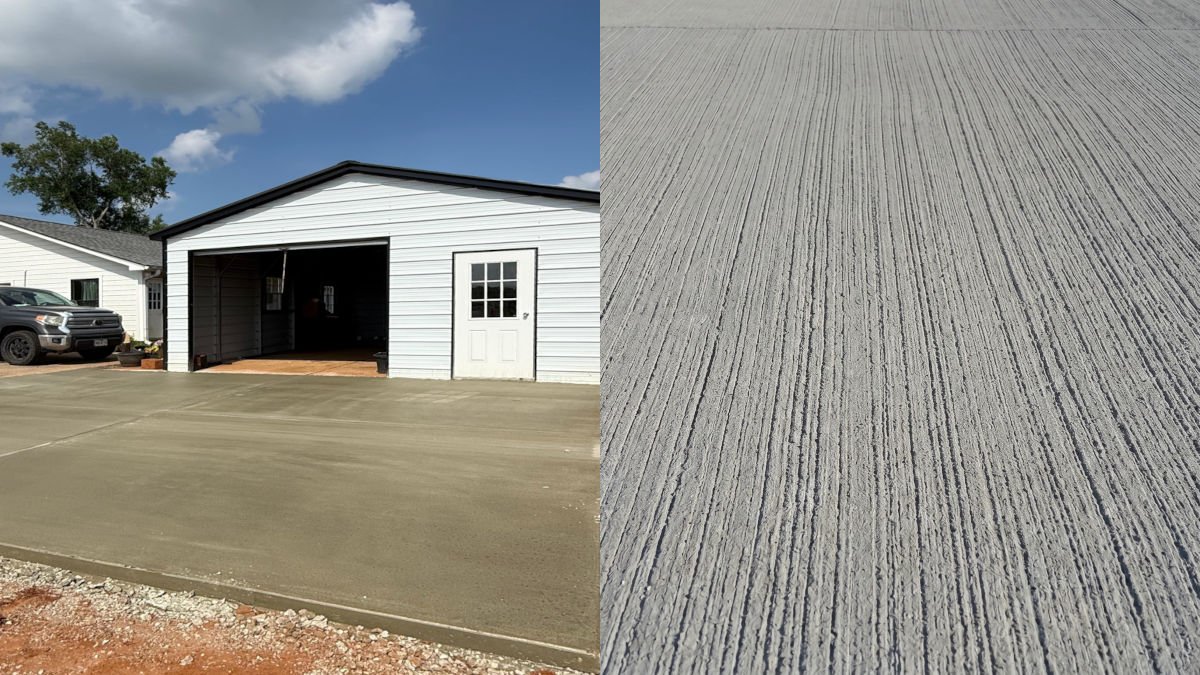
A series of parallel lines dragged across the surface with a concrete broom while the mix is still in its plastic state. The resulting texture is linear and consistent — slightly rough to the touch, with a matte gray appearance. No color variation, no pattern. Clean and utilitarian.
The depth of the broom texture can vary: a light broom creates a subtle texture, while a coarser drag creates deeper grooves with more aggressive slip resistance. The right depth depends on the application.
- Concrete driveways — handles vehicle traffic, rain, oil, and the East Texas heat cycle without complaint
- Sidewalks, utility slabs, and any surface where function outweighs aesthetics
- Any budget-conscious project — broom finish adds no material cost over a standard pour
It looks like concrete — that’s a description, not a complaint. Homeowners who want visual distinction in an outdoor entertaining space often find broom finish too utilitarian for the setting. It also shows surface staining more visibly than exposed aggregate, because the relatively smooth color field makes oil and rust spots stand out.
Exposed aggregate is what happens when the top layer of cement paste is washed or brushed away after the pour, revealing the stone, gravel, or decorative aggregate embedded in the mix. The result combines the structural strength of concrete with a texture and visual depth that’s clearly a step above standard.
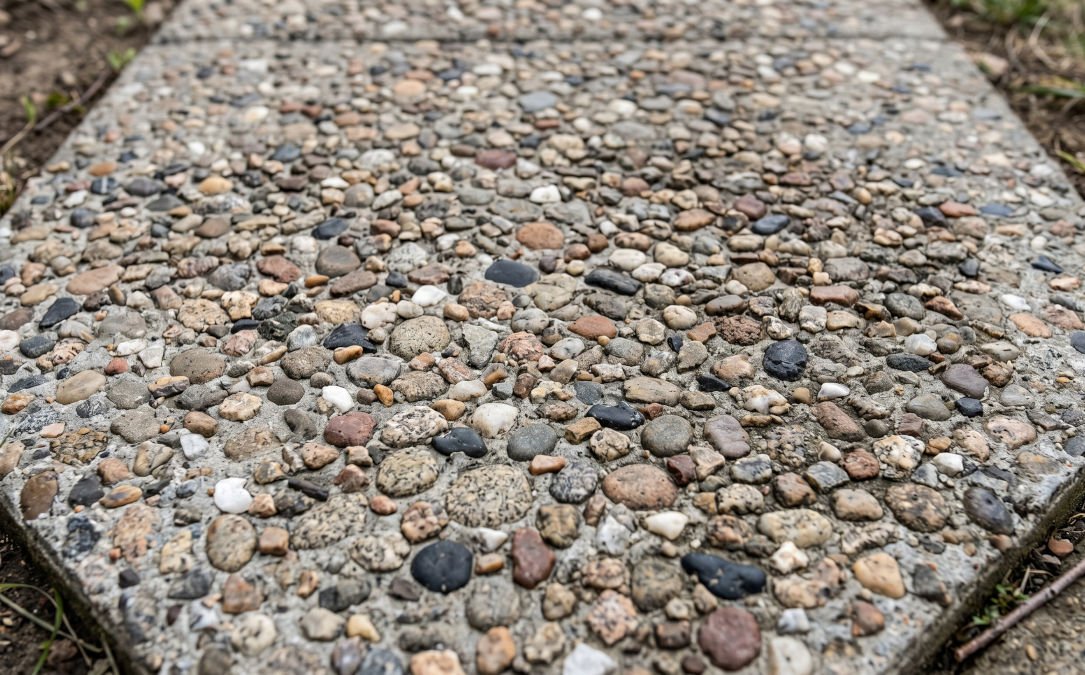
Rough, natural, and varied. The appearance depends on the aggregate used — standard gravel gives a speckled gray-and-tan look; decorative mixes can incorporate river stone, quartz, or colored aggregate. The surface feels like coarse sandpaper underfoot — noticeably textured, with visible stone protruding slightly from the cement background. No two exposed aggregate surfaces look identical.
- Driveways and pool decks — superior traction on wet surfaces makes it ideal where water is consistently present
- Concrete patios — visual character without the cost or maintenance commitment of stamped
- Any surface where the homeowner wants an upgrade over broom without changing maintenance habits significantly
Costs $1 to $3 more per square foot than broom finish. Requires periodic sealing to protect the aggregate and cement matrix — unsealed exposed aggregate in East Texas will absorb moisture and staining more readily. Cleaning is more involved than broom: the texture catches debris, and pressure washing is the primary maintenance tool.
Stamped concrete is the most visually ambitious option and the most technically demanding to execute. It uses textured molds pressed into the surface during the finish window, combined with integral color or color hardener, to replicate the appearance of stone, brick, slate, wood plank, or tile — at a fraction of the cost of those materials. Done well, it’s striking. Done poorly — by a crew without experience or rushed by a tight working window — it’s a permanent record of the shortcuts.
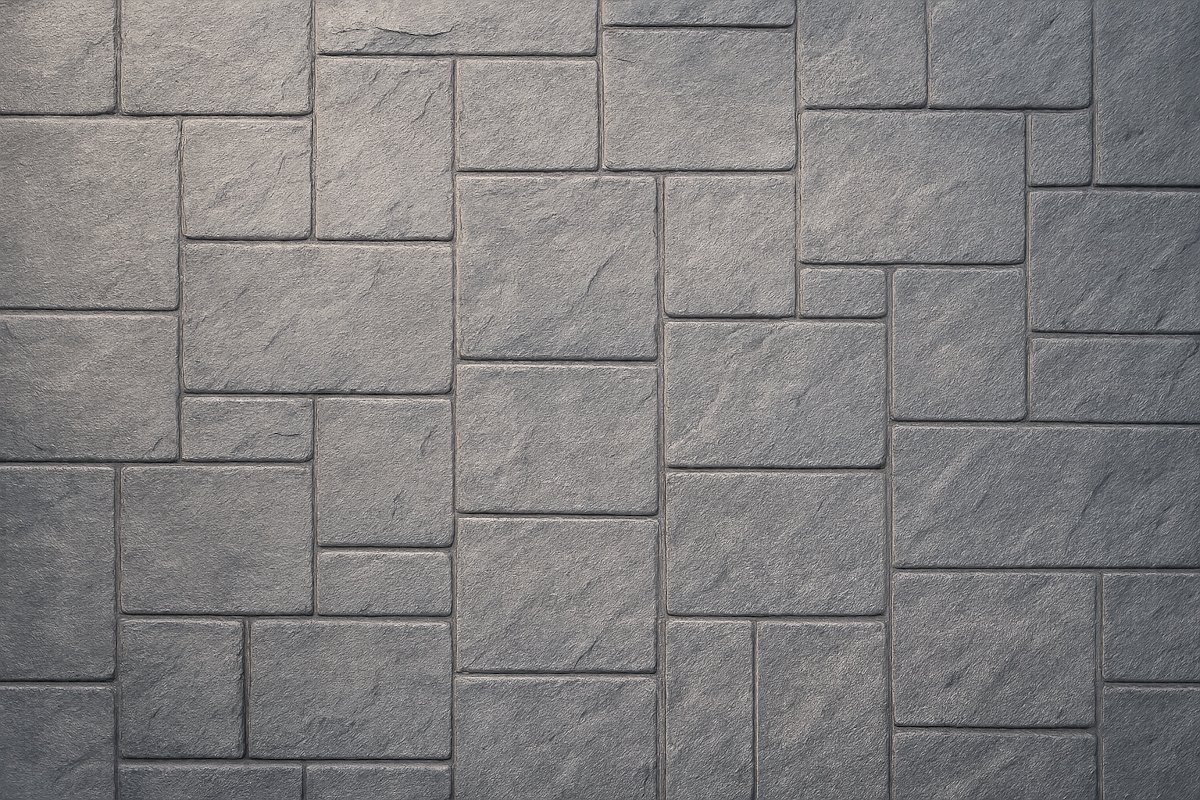
- Ashlar slate — irregular rectangular “stones” with grout lines; most popular residential pattern
- Cobblestone / European fan — classic look suited to formal outdoor spaces and front entries
- Wood plank — replicates the look of timber decking with visible grain detail
- Color layers — base color, release agent, and hand-applied accent staining create a natural stone read from a distance
Stamped concrete runs $12 to $20+ per square foot in the Tyler area — vs. $6–$10 for a standard broom-finish patio. The premium covers color hardener, release agent, stamps, and additional crew time. Maintenance is the honest trade-off: sealing every 2 to 3 years is required — not optional — to protect color and texture from UV degradation and staining. On a 400 sq ft patio, the difference between broom and stamped can be $2,500 to $5,600 in finish cost alone.
Stamped surfaces are more sensitive in the early curing period than standard finishes. Foot traffic should be delayed 48 to 72 hours, and the surface sealer applied within days of the pour needs adequate cure beneath it to bond correctly. As the concrete curing guide covers, the 28-day window matters especially for stamped work.
Patios and pool decks are stamped concrete’s natural home — where aesthetics matter alongside function and the higher cost per square foot is justified by the visual return. Walkways and front entries are also strong applications when connecting to landscaping. See stamped concrete scope and process →
Salt finish is the least discussed option and consistently underestimated. It’s created by pressing rock salt into the surface of fresh concrete, then washing it out after the concrete sets — leaving behind a pattern of small, irregular pits that provide texture without visual noise. It’s the finish that photographs simply and coordinates with almost any design direction.
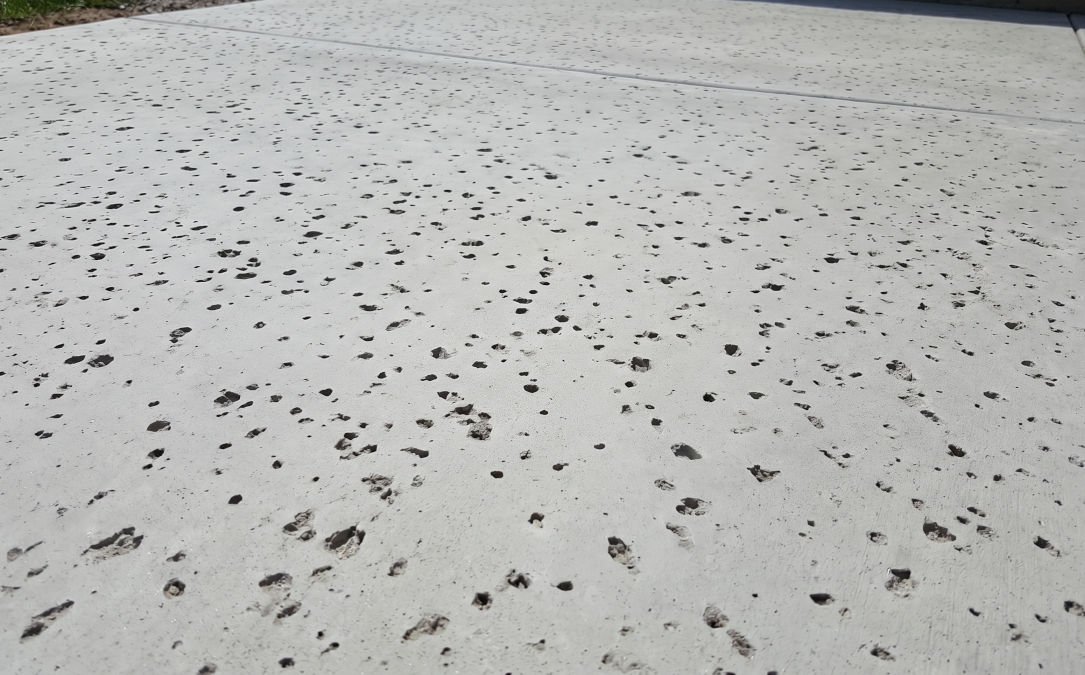
Understated. The pitting pattern is random and fine — from a distance, a salt finish reads almost like a lightly textured plain surface. Up close, the dimpled texture is visible and tactilely distinct. The color remains the natural gray of the concrete, giving it a clean, unfussy appearance that ages well without looking dated.
- Patios and walkways — subtle traction for foot traffic without the aggressive roughness of exposed aggregate
- Pool surrounds where the visual language is intentionally restrained
- Homeowners who want something more refined than broom without the cost or maintenance of stamped
- Costs roughly $1 to $2 per square foot more than broom finish
The pitting pattern creates small areas of surface weakness that vehicle traffic and the weight cycling of parking loads deteriorate over time. For pedestrian applications, those pits are fine. For 4,000-pound vehicles driving over the same surface daily, they accelerate surface wear. Salt finish also requires specific temperature conditions during application — in East Texas summer heat, the compressed working window makes execution more demanding on the crew.
Smooth trowel finish is produced by repeatedly working a steel trowel across the concrete surface as it cures, closing the surface and creating a dense, polished plane with minimal texture. It’s the finish associated with interior slabs, garage floors, and surfaces that will receive a secondary coating or treatment.
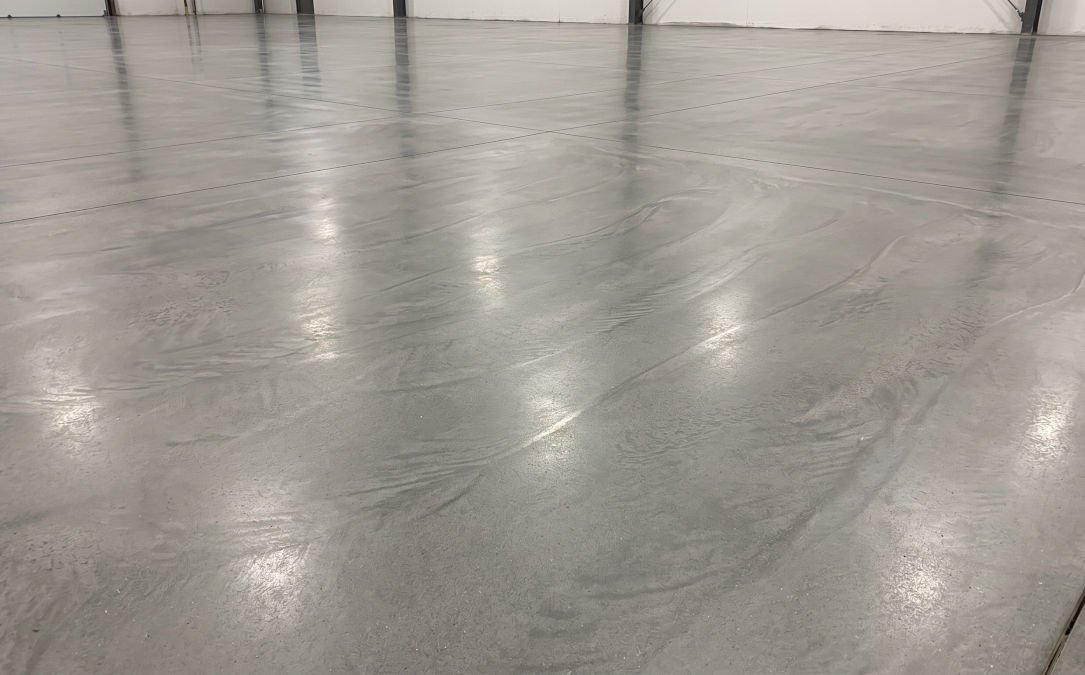
Flat, dense, and reflective when wet. The surface feels almost glassy compared to broom finish — noticeably smoother, with a refined appearance. Color is typically consistent gray, though smooth surfaces accept stain and epoxy coating more readily than textured finishes because the closed surface provides a better bonding substrate.
- Garage floors and interior shop floors — especially when the homeowner plans to apply an epoxy coating or concrete stain afterward
- Warehouse floors and finished interior spaces as the base layer before polishing or sealing
- Any surface that is dry, enclosed, and will receive a secondary treatment
Smooth trowel finish is genuinely dangerous on outdoor surfaces in wet conditions. The closed surface offers minimal traction when wet — a smooth concrete patio after East Texas rain is a slip hazard, not an outdoor living space. The same applies to driveways: the texture that makes broom finish grip tires is entirely absent from a smooth trowel surface. Any contractor who pours smooth trowel on an outdoor exposed surface without raising this issue has either not done the project before or doesn’t care about the outcome.
The finish is one decision in a seven-phase process. Understanding the full sequence — from estimate to final walkthrough — helps you hire confidently and protect your investment.
Read the Full GuideHow to Choose: By Project Type
The right finish is not subjective — it’s determined by function first, then aesthetics, then budget. Here’s the direct answer by project type.
The finish affects the early curing period — especially stamped concrete. Understanding the 7-day and 28-day milestones helps you protect your investment after the crew leaves.
Read the Curing GuideWhat to Ask Your Contractor About the Finish
The finish conversation should happen at the estimate — not on pour day. If your contractor hasn’t asked about finish by the time they hand you a written proposal, bring it up yourself. These questions cut through vague answers quickly.
- “What finish do you recommend for this project, and why?” A contractor with experience explains function-based reasoning. “Whatever you want” is not an answer when you’re making a 30-year decision.
- “What does the finish include in cost — materials, tools, crew time?” Stamped and exposed aggregate have material costs that should appear as line items, not buried in a lump sum.
- “Does this finish require sealing? When, and at what interval?” Know the maintenance commitment before the concrete sets. A stamped finish that requires sealing every two years is a long-term cost item — factor it in.
- “How does East Texas heat affect the working window for this finish?” Stamped and exposed aggregate in particular are time-sensitive during Tyler summers. An experienced crew adjusts scheduling during high-heat periods.
- “Have you done this finish before, and can I see examples?” The portfolio should answer part of this — but asking directly tells you whether the crew has executed that finish under real conditions, not just in theory.
Honest answers — no filler, no sales pitch.
All five finishes last the life of the slab — typically 30 to 50 years — when prep and pour are done correctly. Durability differences show up in surface wear and maintenance requirements, not structural lifespan. Broom and exposed aggregate require the least maintenance to sustain. Stamped concrete requires the most consistent maintenance (sealing) to preserve its appearance. Smooth trowel on interior slabs is extremely durable. Salt finish sits in the middle.
No. The finish is applied during the pour. Once the concrete has set, the surface is permanent — short of grinding, overlaying, or demolishing and repourring. This is exactly why the decision must be made and confirmed before pour day, not during it.
Stamped concrete has moderate traction — more than smooth trowel, less than broom or exposed aggregate. When sealed with a high-gloss sealer (common on stamped work for visual effect), the surface becomes noticeably more slippery when wet. Matte or satin sealers preserve better traction. If the stamped surface will see heavy foot traffic or is adjacent to a pool, discuss an anti-slip additive in the sealer with your contractor before work begins.
It depends on the finish and exposure. Stamped concrete: every 2 to 3 years. Exposed aggregate: every 3 to 5 years. Broom finish and salt finish: optional, but every 3 to 5 years extends stain resistance and lifespan. Smooth trowel interior slabs: as needed based on traffic. Always wait until after the 28-day cure before applying sealer.
Yes. Broom finish is the baseline. Exposed aggregate and salt finish add $1 to $3 per square foot. Stamped concrete adds $6 to $14+ per square foot over a standard broom-finish patio, depending on pattern and color complexity. On a 400 square foot patio, the difference between broom finish and stamped can be $2,500 to $5,600 in finish cost alone — before any other project variables. Know the cost before you fall in love with the look.
Yes — and it’s a legitimate design consideration, particularly with exposed aggregate or broom finish. Stamped concrete can also run across both surfaces, though the cost multiplies accordingly. If visual continuity matters to you, raise it in the estimate phase so the contractor can design the transitions between surfaces correctly.
Your Finish?
The finish decision belongs in the estimate conversation — not on pour day. SMG walks every client through finish options based on their specific project, traffic pattern, and maintenance tolerance before any contract is signed. Written proposal. Local crew. East Texas experience.
Or call us directly: (903) 780-3125 · Mon–Fri 9AM–4PM · Sat 9AM–12PM